

FREQUENTLY ASKED QUESTIONS
Questions, answered.
A simple place to find answers about our work, programmes, participation and collaboration.
The Midway Journey is a platform and a catalyst for collective action around waste, materials, communities and sustainable change. Its work brings together awareness, community participation, low-waste systems, research and collaboration. More about us.
To create material-conscious and waste-resilient communities across Northeast India.
Four interconnected areas guide the work: Knowledge & Awareness, Systems & Inclusion, Collaboration & Policy, and Culture & Ecology. How they shape our work.
Understanding where materials come from, how they are used, what happens to them after use — and how our everyday choices can shift waste and resource systems.
Through the Contact Us page you can apply for an internship, sign up as a volunteer, join the community for updates, or simply send the team a message.
Yes. TMJ runs awareness, learning and community-engagement activities with educational institutions and communities — including volunteering and cleanup participation. Get in touch to find a fitting opportunity.
Yes. TMJ has worked with educational institutions, urban and rural communities, corporates and other stakeholders through workshops, awareness activities and waste-management initiatives. Start a conversation.
Use the Contact Us page — address, email, phone, enquiry forms for internships, volunteering, community and general messages are all there.
Participate in programmes, collaborate on an initiative, or donate. Every pathway starts at Contact Us.
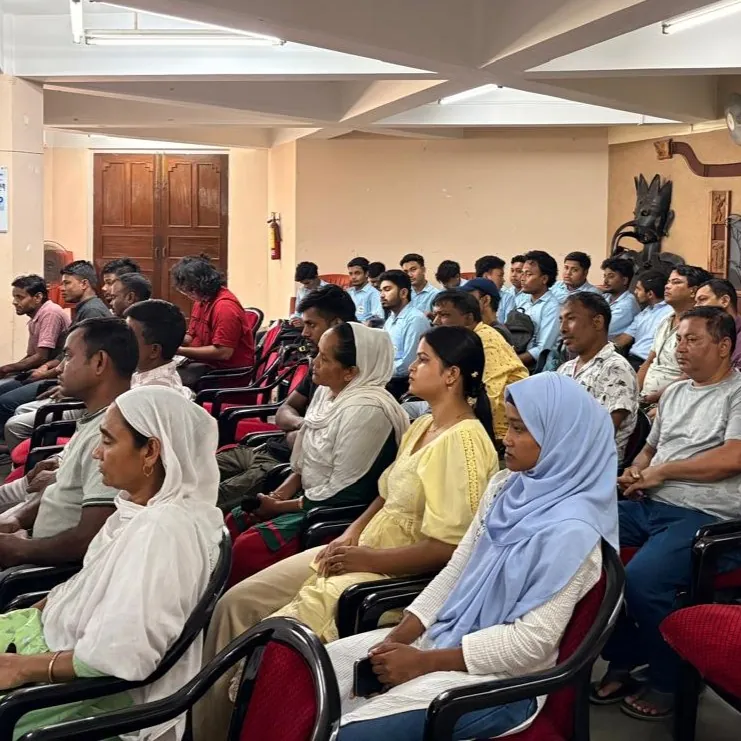
Yes — with educational institutions, urban and rural communities, corporates and other groups. So far: 200+ workshops with 4,000+ participants.
Waste, materials, source segregation, responsible consumption, low-waste practices and community action — often experiential and participatory. Regular formats include waste-awareness seminars, Kacchre Pe Charcha (visits to dumpsites and recycling centres) and composting workshops.
Yes. Contact the team to discuss a programme that fits your group — including the year-long School Edu Waste Programme for schools.
No. TMJ works with educational institutions, urban and rural communities, corporates and other stakeholders.
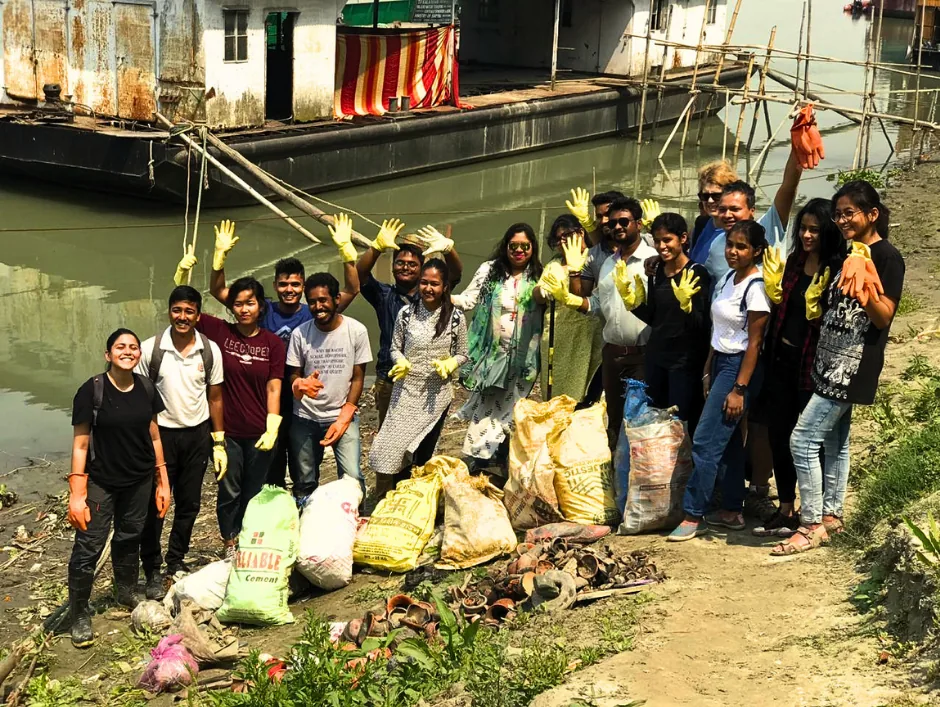
A cleanup combined with citizen learning and participation in waste management — including training in source segregation and composting — rather than a one-off litter pick. In 2022 TMJ coordinated an All-Assam Zero Waste Cleanup across 6 locations with grassroots organisations.
150+ drives, recording 18+ tonnes of waste collected, 8+ tonnes processed, and 1,000+ citizens trained in source segregation and composting.
Waste is a community and systems issue. Cleanup lets people understand waste first-hand, practise segregation and composting, and stay involved in longer-term solutions instead of just moving rubbish from one place to another.
Zero-waste and low-waste models: community-led collection, storage, transportation, sorting, recycling, source segregation, composting and awareness. Flagships include Power Loop (Guwahati households) and Root Connect (forest-fringe communities of Manas, Raimona and Soraipung).
Power Loop is TMJ’s community-led dry-waste collection service in Guwahati. It began during Covid as Power of 300 — waste from 300 households supporting 100 ragpicker families — and has grown into a monthly segregated-waste pickup now used by 500+ families.
Separating materials before they mix keeps recyclables recoverable. Mixed waste mostly reaches landfills; segregated waste can be sorted, recycled and processed responsibly — which is exactly what TMJ trains households to do.
Yes — experiential visits are part of the awareness and learning work (Kacchre Pe Charcha). Documented so far: 15+ dumpsite visits with 500+ participants, and 30+ recycling-centre visits with 500+ participants.
Yes — through awareness, learning and zero-waste/low-waste initiatives, including the School Edu Waste Programme: a year-long journey from waste awareness to resource management with monthly collection for the school.
Yes. TMJ has managed waste at public events in Assam — including two editions of the Jeevan Silanoi River Kite Festival, Majuli Music Festival 2022 and the 7th Northeast Green Summit — focusing on waste reduction, avoiding single-use plastic, composting food waste and recycling dry waste.
Yes. With zero-waste event-management experience behind it, the team can discuss a suitable approach for your event. Contact TMJ — there is no online booking form; every event is scoped in conversation.
Yes — research, documentation and policy influence are a core area: primary data collection, baseline assessments, understanding the informal sector, monitoring policy implementation, and resources for zero/low-waste practitioners. One study: city-wide waste characterisation and inventorisation for Guwahati and Jorhat with i-FOREST.
Yes — collaboration spans citizens, corporates, governments and institutional partners across research, policy and field programmes. Our ecosystem shows who journeys with us.
Waste workers are the city’s real waste managers, yet work in difficult conditions. TMJ supports dignified labour, fair working conditions and social security for waste-picker communities — central to its Systems & Inclusion mission.
No. Collection is one part of a larger approach spanning awareness, community engagement, low-waste models, research, documentation, policy influence, learning and collaboration.
Yes — TMJ has run workshops and engagement with corporates alongside collaboration on waste-management and community initiatives. Contact the team to explore a fit.
Yes. Collaboration with citizens, organisations, corporates, governments and communities is how TMJ works. Project enquiries are discussed directly with the team via Contact Us — there are no fixed packages or tiers.